From Repeated Questions to AI That Supports Your Team
In many organizations, critical knowledge doesn't live in systems, it lives with "certain people." These are the individuals who know how to solve problems, understand systems deeply, or have been around long enough to remember every detail.
At first, this may seem like an advantage. But over time, it quietly becomes a bottleneck. Every new question goes back to the same person. Every issue waits for the same answer. And day by day, your most capable people spend more of their time responding to repetitive questions.
The impact is not just slower operations. It limits the true potential of your team, keeping them focused on repeating knowledge instead of developing new ideas or creating greater value for the organization.
When Knowledge Becomes a Bottleneck
This issue is often overlooked as a system-level problem because work still appears to move forward. In reality, however, the organization is relying on fragmented knowledge that cannot scale.
As the number of questions grows, the most frequently asked individuals naturally become bottlenecks. Teams wait for answers. Work slows down. And in some cases, responses become inconsistent, depending on timing or context.
The larger the organization grows, the more visible this problem becomes. Knowledge is not easily accessible, it remains tied to individuals.
From Knowledge Holder to Knowledge System
The real shift is not about making people respond faster, but about making knowledge accessible without needing to ask.
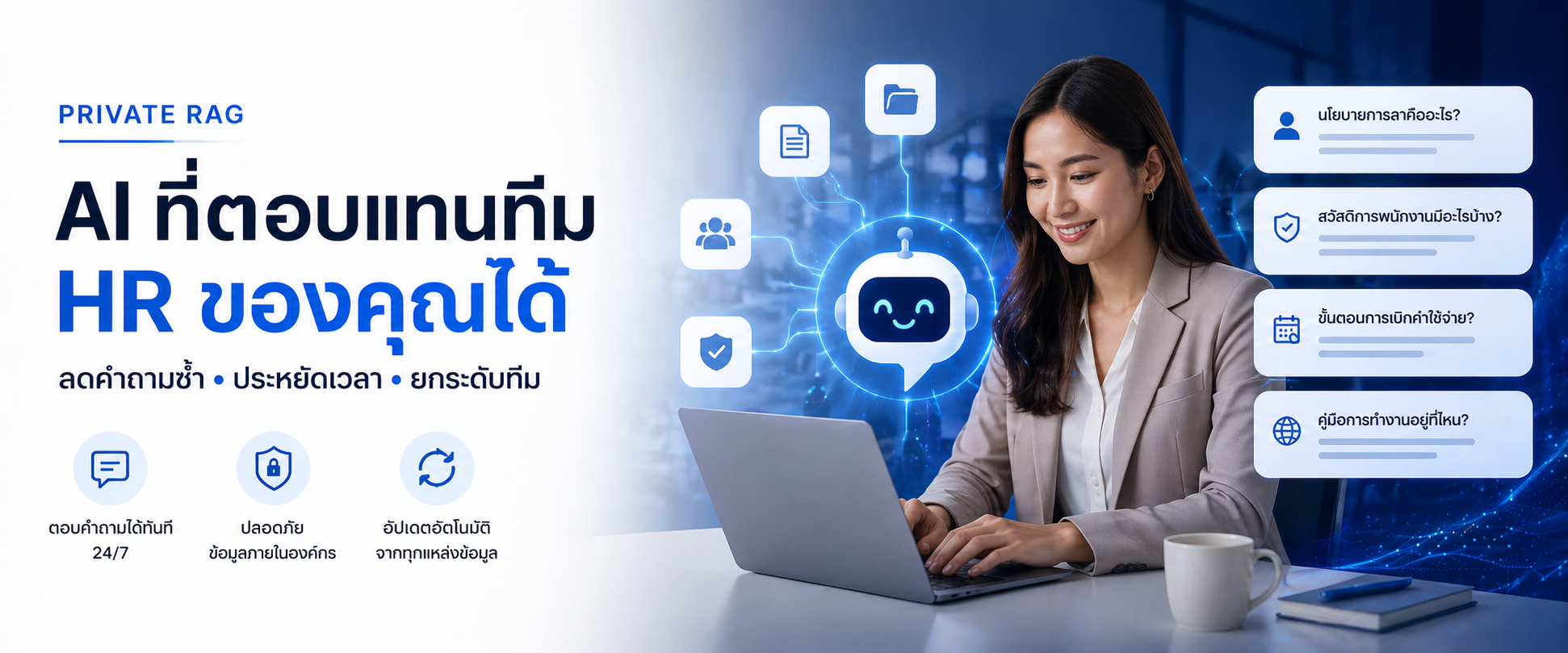
This is where Private RAG AI comes in. It captures knowledge from documents, systems, and internal data, then structures it in a way that allows AI to understand and respond on behalf of the team.
Combined with continuous data crawling, knowledge is no longer static. It is constantly updated, connected, and refined, allowing AI to provide answers that closely match real experts.
AI as a Knowledge Scaler
When knowledge is stored in a format that AI can access, it becomes a scalable asset, not one limited to individuals.
AI can answer multiple questions simultaneously, work 24/7, and access all knowledge without bias. This allows teams to get instant answers without waiting for anyone.
This is where AI begins to shift from a thinking assistant to an actual team member that can answer questions on your behalf.
When to Start Using AI
Organizations should consider AI when they begin to feel that "the same questions are asked every day" or when employees spend excessive time searching for information.
Especially in cases where questions about policies, system usage, or product explanations occur repeatedly. If an organization wants to speed up operations, reduce time spent on repetitive questions, and fully utilize data, that is the right time to start using AI.
The Impact on Your Team
When AI starts answering questions, the impact is not just reducing time spent on responses—it's changing how the team works.
Those who were most frequently asked will have more time to create value. New team members will understand systems faster without repeatedly asking the same people. And everyone in the organization will have equal access to knowledge.
This is not just about efficiency—it's about creating a knowledge-sharing culture that doesn't depend on individuals.
For more information, please contact Throughwave Thailand:
📧 Email: info@throughwave.co.th
📞 Tel: +66 2-210-0969
Website: https://www.throughwave.co.th/