What is RAG
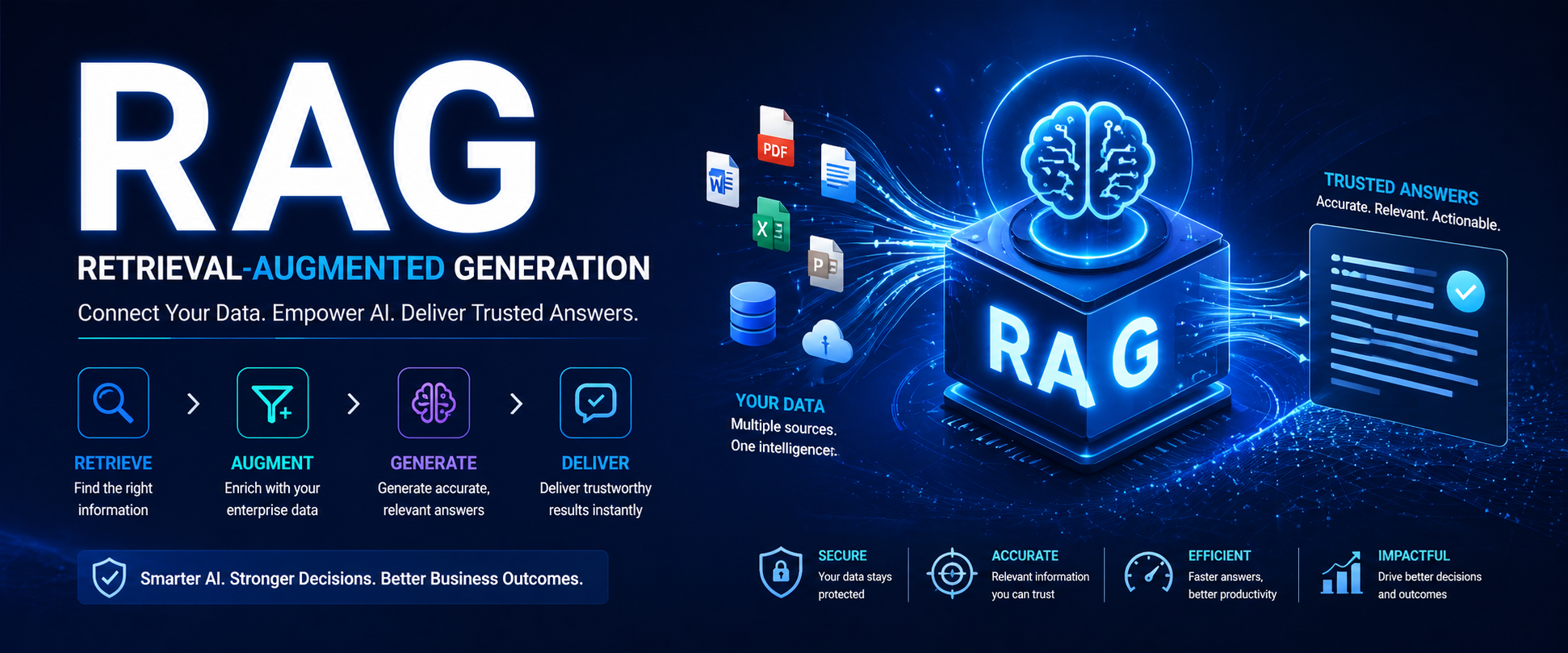
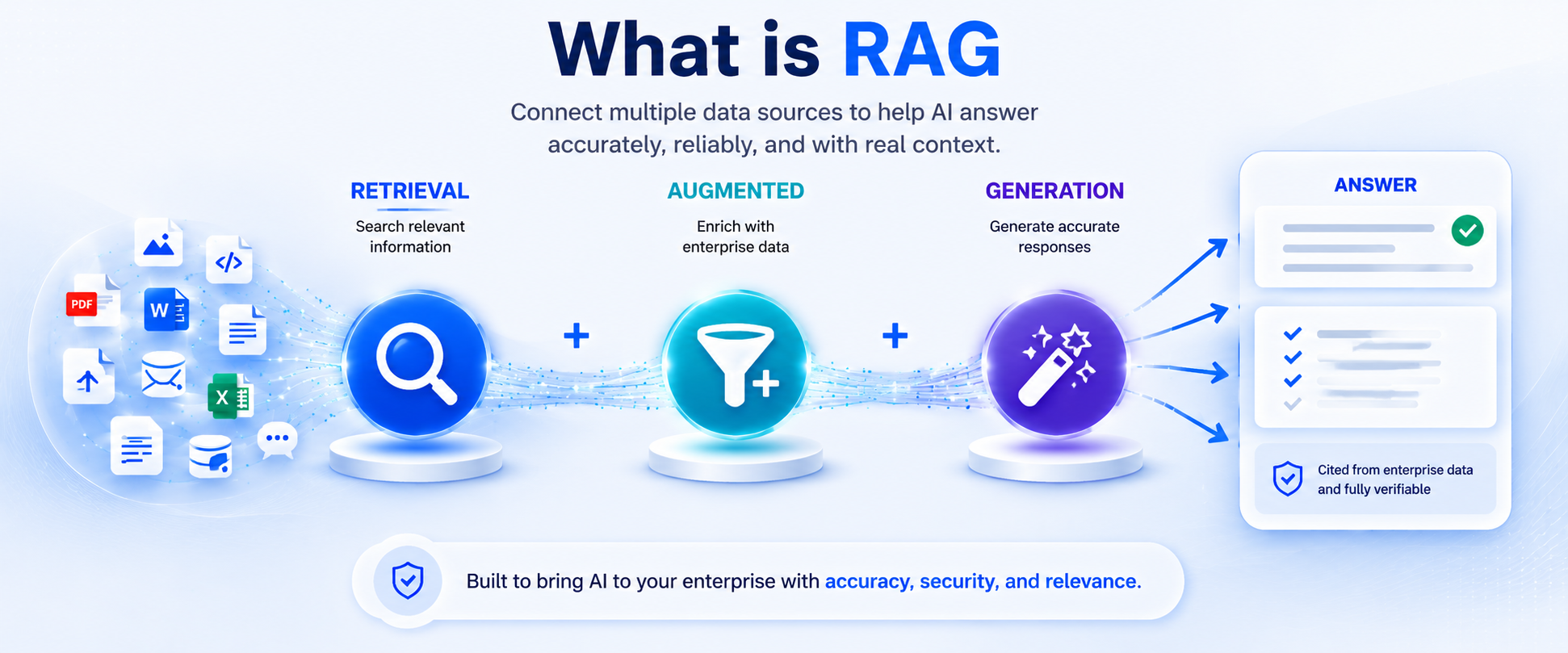
RAG, or Retrieval-Augmented Generation, is a technology that enables AI to “retrieve an organization’s data first, and then generate an answer,” instead of relying solely on general knowledge. AI systems typically generate responses based on pre-trained data, but they do not have direct access to internal company information. RAG fills this gap by connecting AI to enterprise data sources such as documents, reports, and databases, ensuring that responses are more accurate and aligned with the business context.
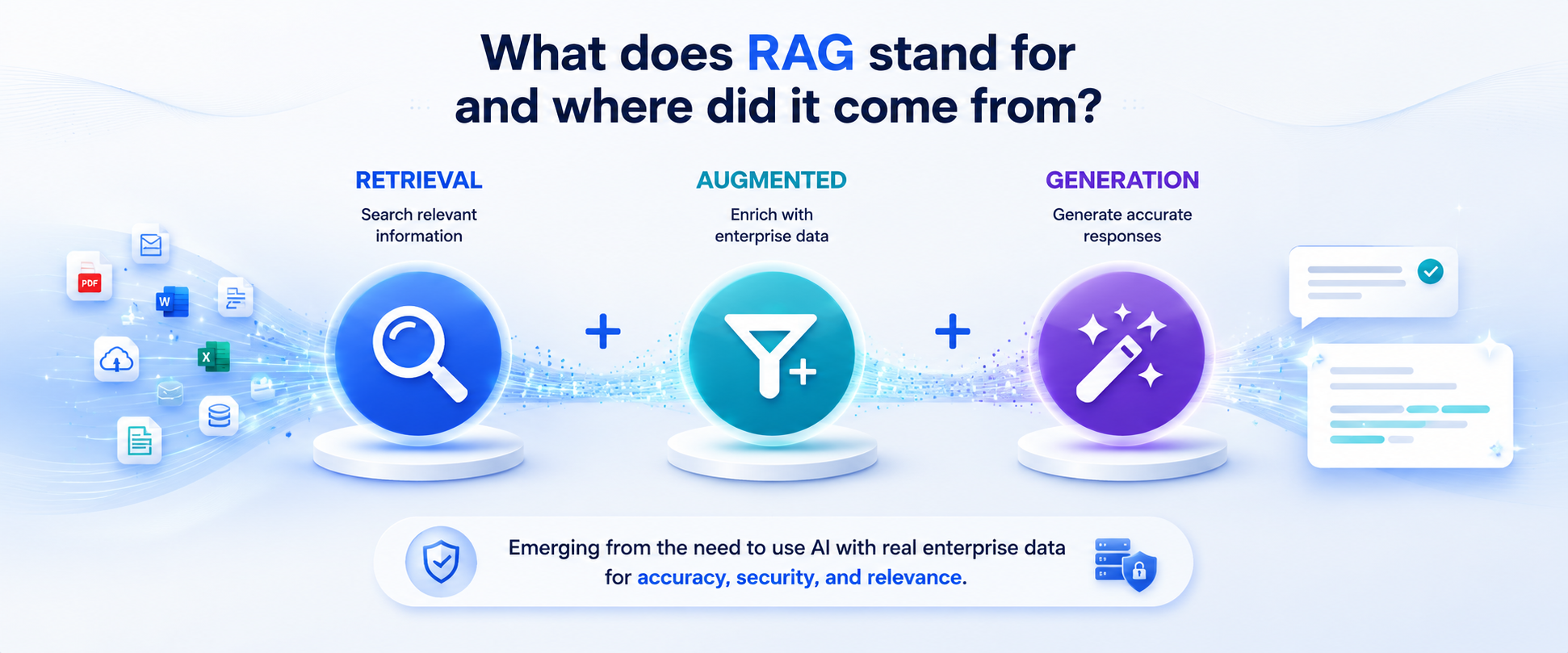
What does RAG stand for and where did it come from
RAG stands for Retrieval + Augmented + Generation. This concept emerged from the need to apply AI in real-world enterprise environments, where relying solely on general knowledge is not sufficient. Organizations often manage large volumes of critical data, including internal policies, operational guidelines, and customer information, all of which require high accuracy and security. RAG provides a way for AI to “learn from real enterprise data instantly” without the need to retrain models.
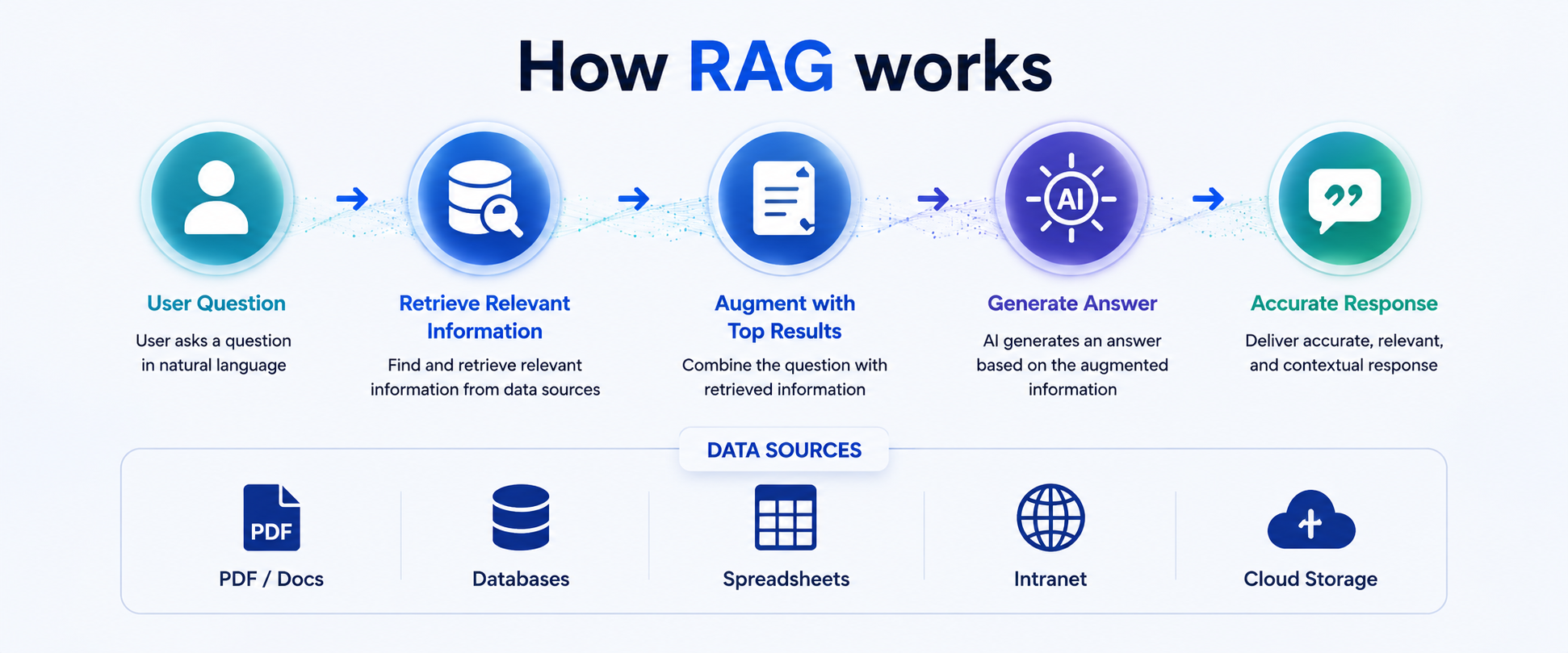
How RAG works
RAG operates by first receiving a user’s query, then searching for relevant information from internal data sources such as PDFs, Excel files, databases, or intranet systems. It selects only the most relevant information and passes it to the AI, which then generates a clear and structured response. This process eliminates guesswork, allowing AI to base its answers on verified organizational data, resulting in responses that are accurate, reliable, and immediately usable for business decisions.
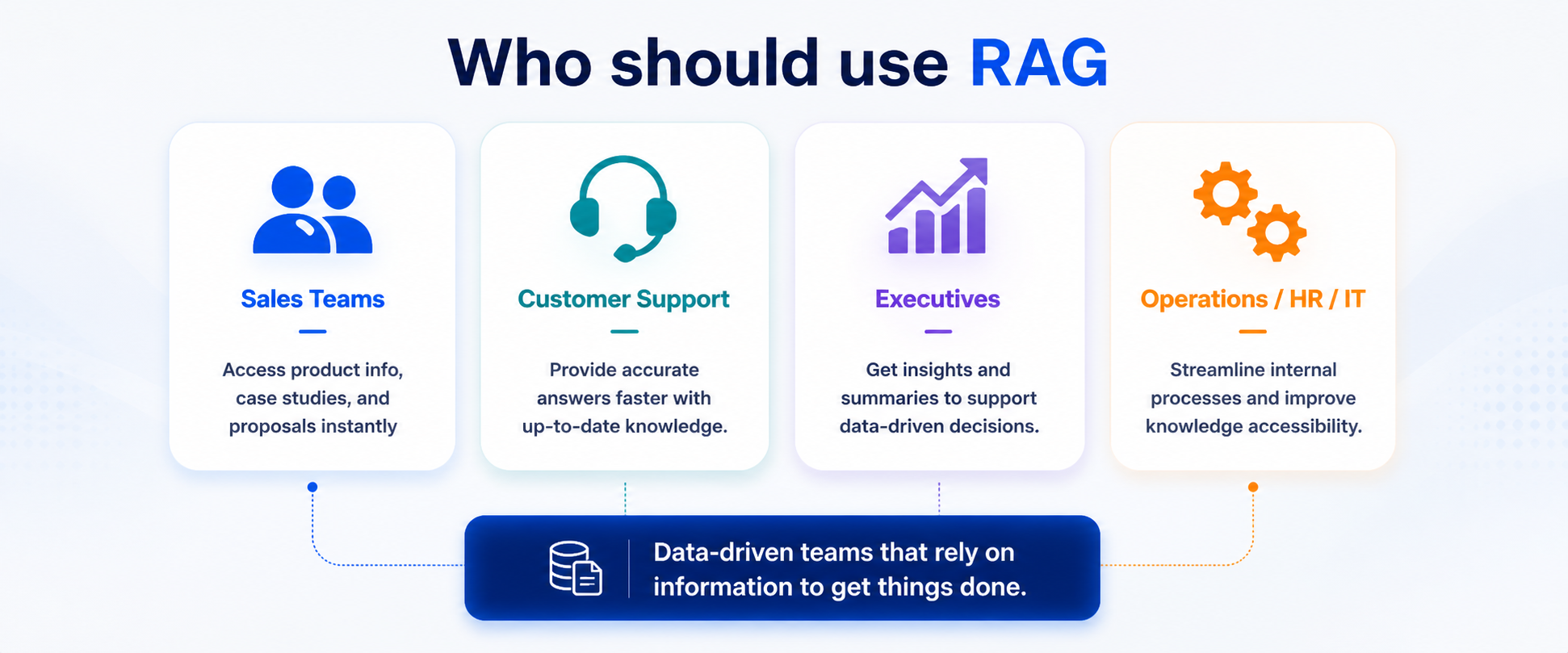
Who should use RAG
RAG is ideal for organizations that handle large volumes of data and rely on that data for daily operations. This includes sales teams that need quick access to product or customer information, customer support teams that depend on knowledge bases, and executives who require data-driven insights for decision-making. It is also particularly valuable for organizations with multiple departments that need to operate from a single, consistent source of truth.
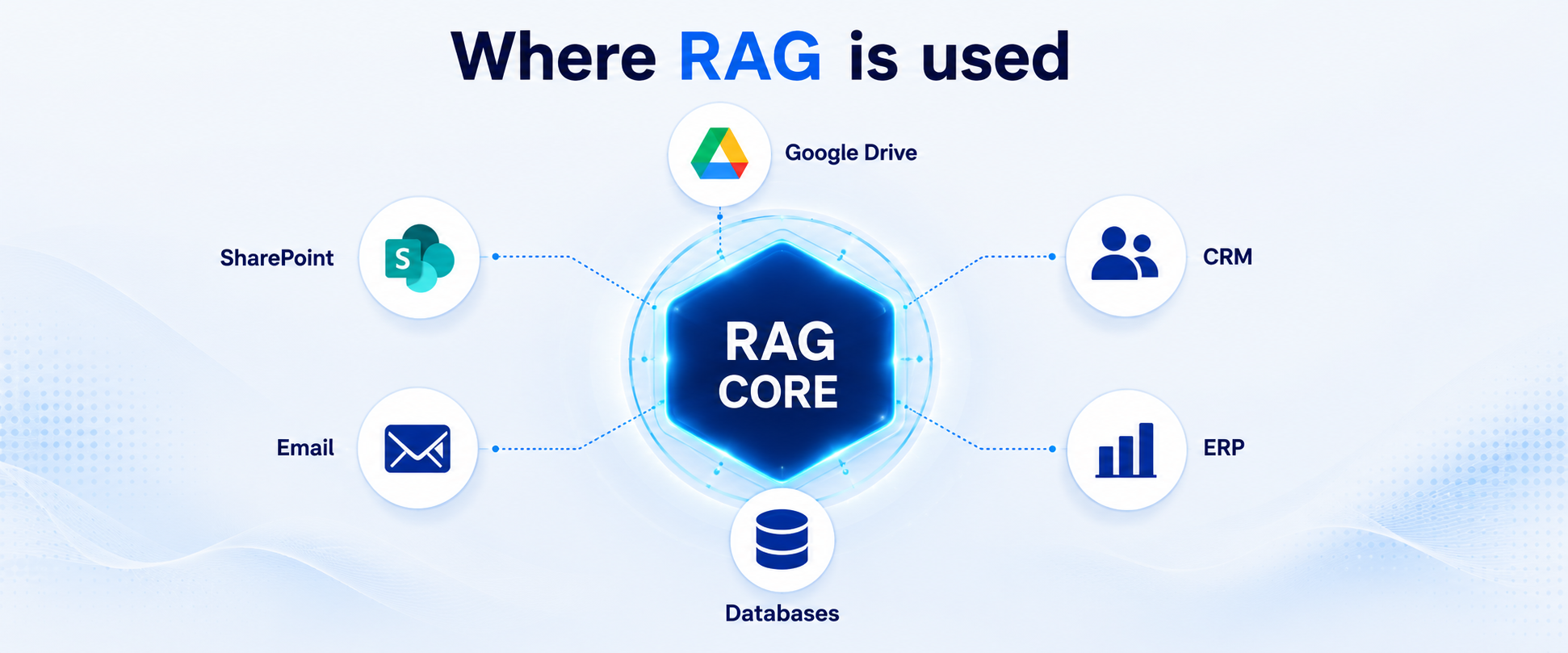
Where RAG is used
RAG can be applied across various systems within an organization, including internal chatbots, employee knowledge assistants, automated customer support systems, and business intelligence tools. It can integrate with existing platforms such as Google Drive, SharePoint, CRM, and ERP systems, enabling AI to access and utilize data stored across multiple environments efficiently.
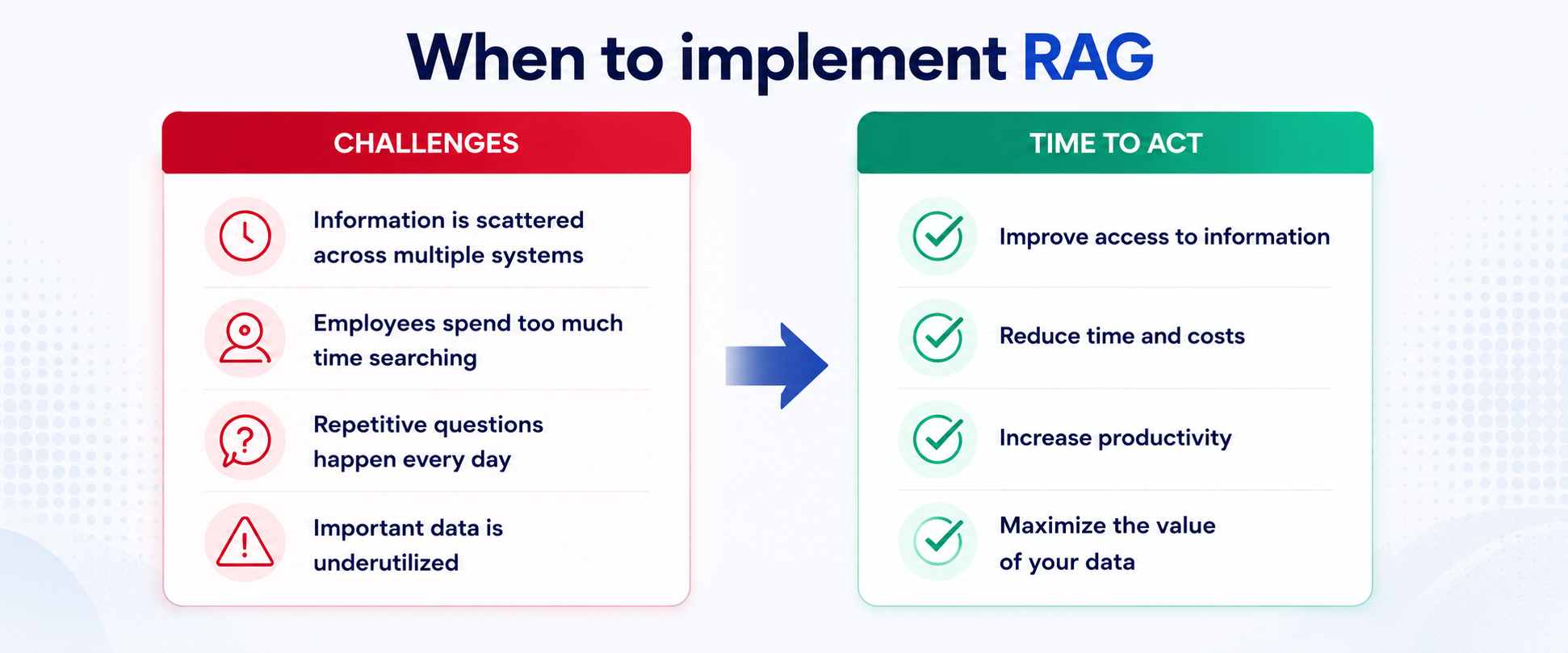
When to implement RAG
Organizations should consider implementing RAG when they begin to experience challenges such as having large amounts of data that are difficult to access, employees spending excessive time searching for information, or repetitive questions occurring frequently across teams. It is especially relevant when businesses aim to improve operational speed, reduce time costs, and fully leverage their existing data assets.
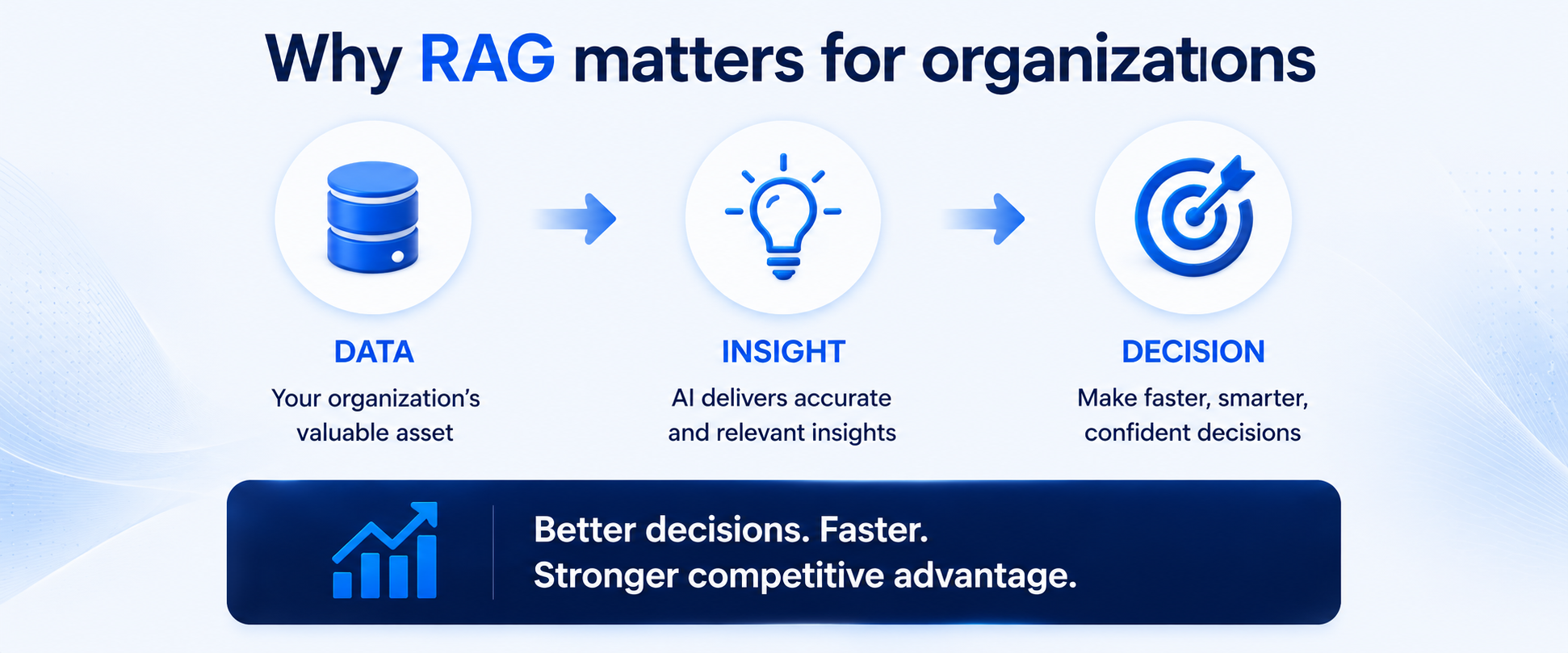
Why RAG matters for organizations
The primary reason organizations adopt RAG is to transform data from a passive asset into an active business tool. RAG enables easier access to information, reduces reliance on individual employees, shortens task completion times, and improves decision accuracy. In a data-driven economy, organizations that can access and utilize information faster and more accurately gain a significant competitive advantage.
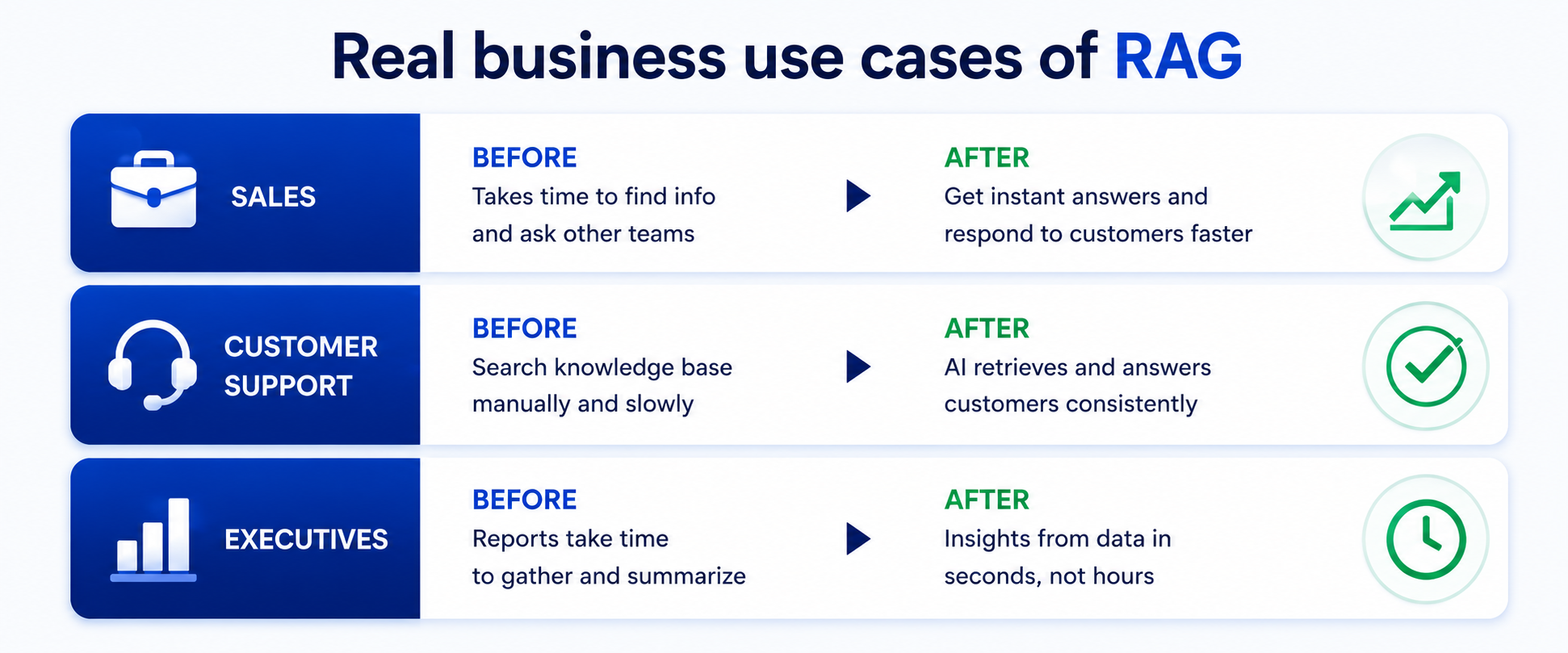
Real business use cases of RAG
In sales teams, RAG allows representatives to instantly answer customer inquiries without waiting for input from other departments. In customer support, it enables systems to retrieve accurate answers from knowledge bases and respond consistently and efficiently. For executives, RAG can summarize reports and provide insights from large datasets within seconds, enabling faster and more informed decision-making.
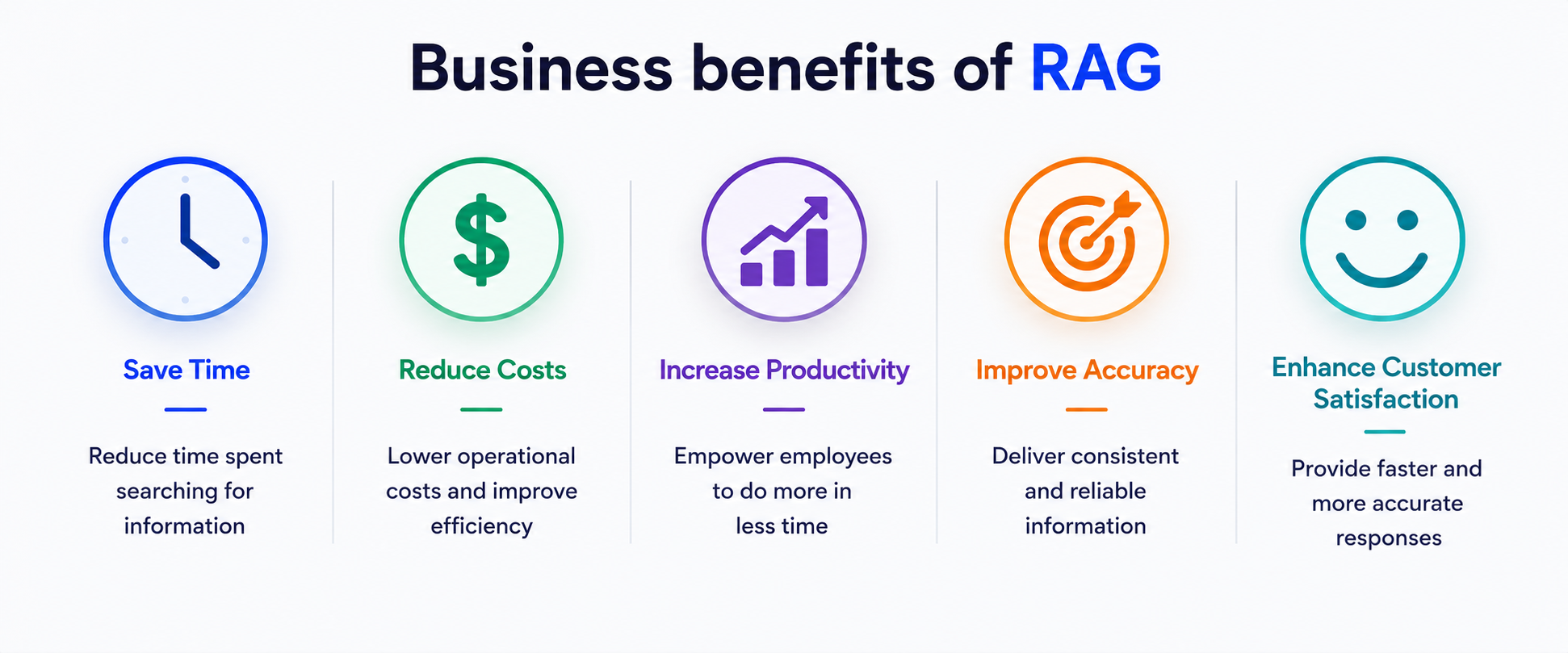
Business benefits of RAG
RAG reduces the time spent searching for information, lowers operational costs, increases employee productivity, and minimizes errors caused by inconsistent data. It also enhances customer satisfaction by delivering faster and more accurate responses. Most importantly, it ensures that organizational data is fully utilized, unlocking its true business value.
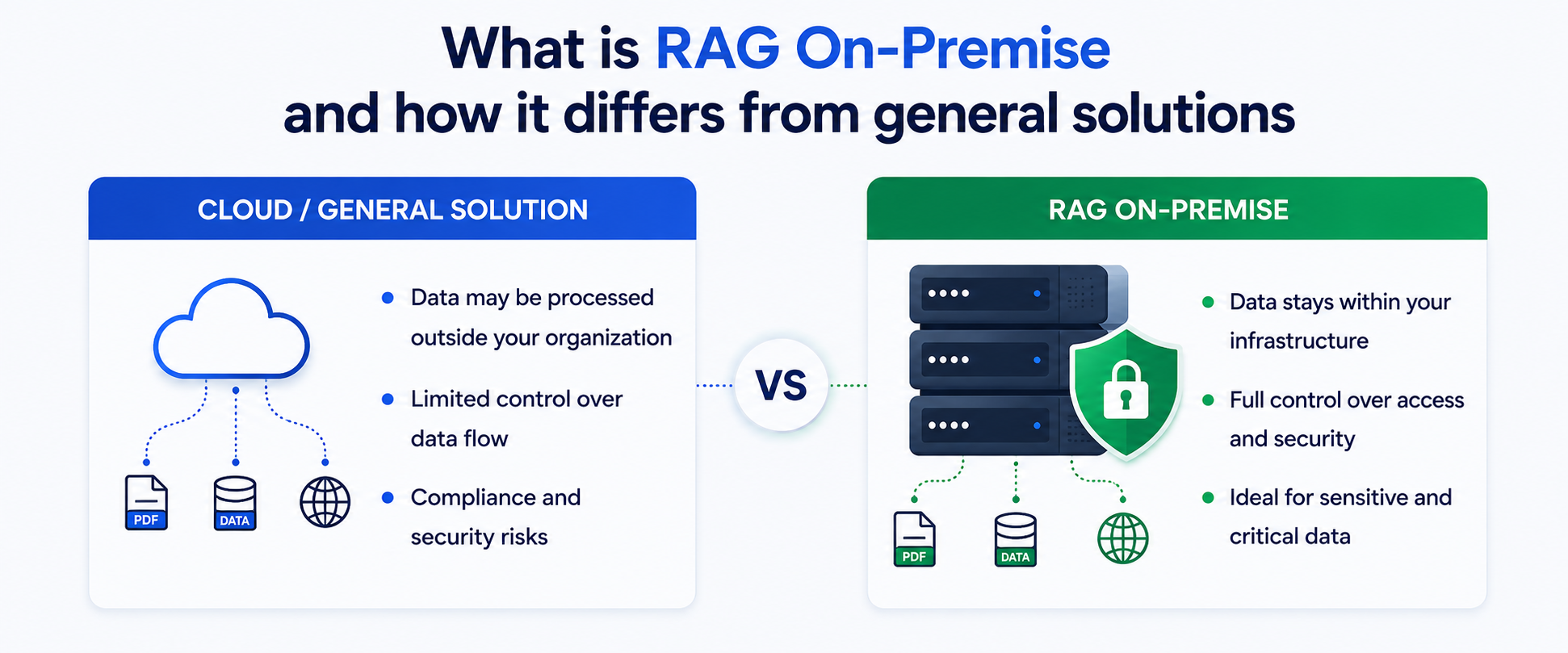
What is RAG On-Premise and how it differs from general solutions
RAG On-Premise refers to deploying the RAG system within an organization’s own infrastructure, where all data is stored and processed internally. Solutions such as those provided by Throughwave are designed for organizations with high security requirements, including banks, hospitals, and enterprises handling sensitive data. This approach ensures that data never leaves the organization, providing full control over access, compliance, and security.
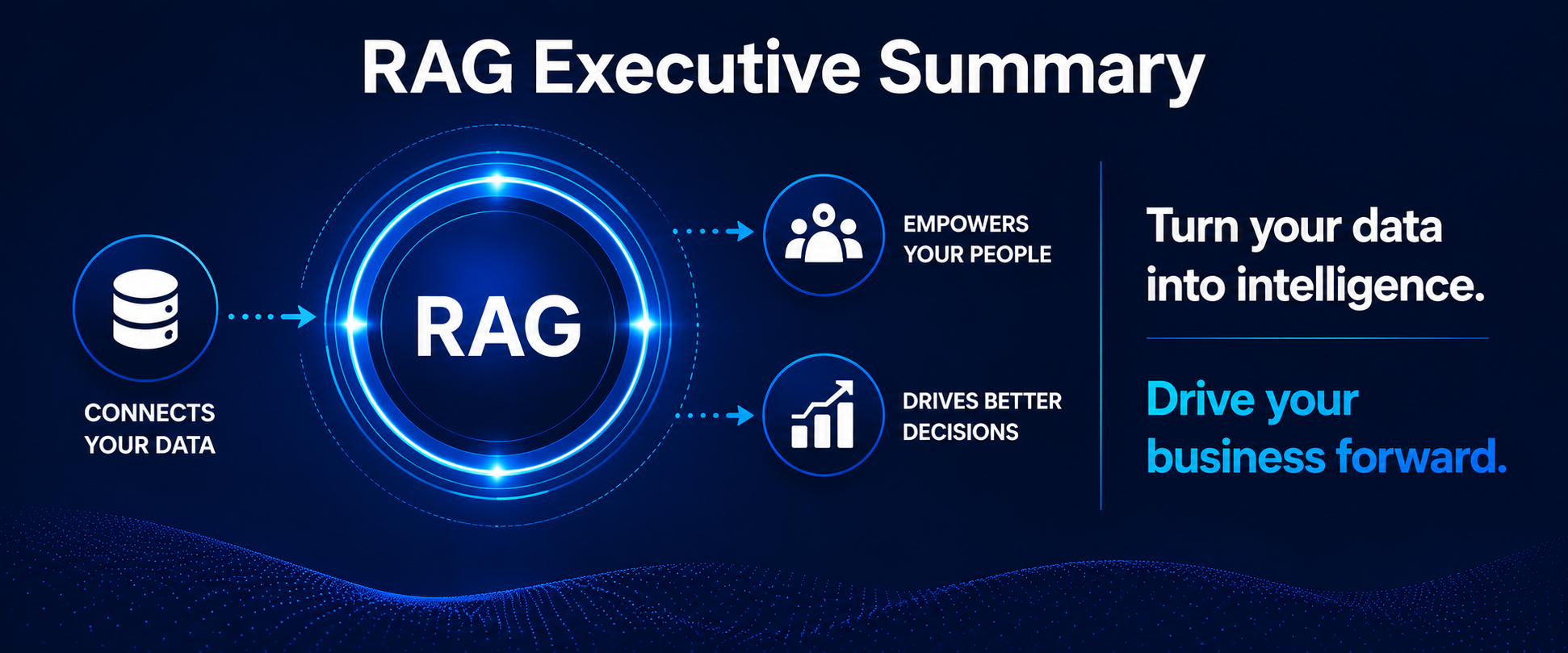
RAG Executive Summary
RAG is a transformative technology that enables AI to effectively utilize enterprise data. It shifts AI from providing generic responses to delivering context-aware, business-specific insights. Organizations that adopt RAG can work faster, leverage their data more effectively, and make more accurate decisions. In an increasingly competitive landscape, having the ability to turn data into actionable intelligence is not optional—it is essential for sustainable growth.
For more information, please contact Throughwave Thailand:
📧 Email: info@throughwave.co.th
📞 Tel: +66 2-210-0969
Website: https://www.throughwave.co.th/